
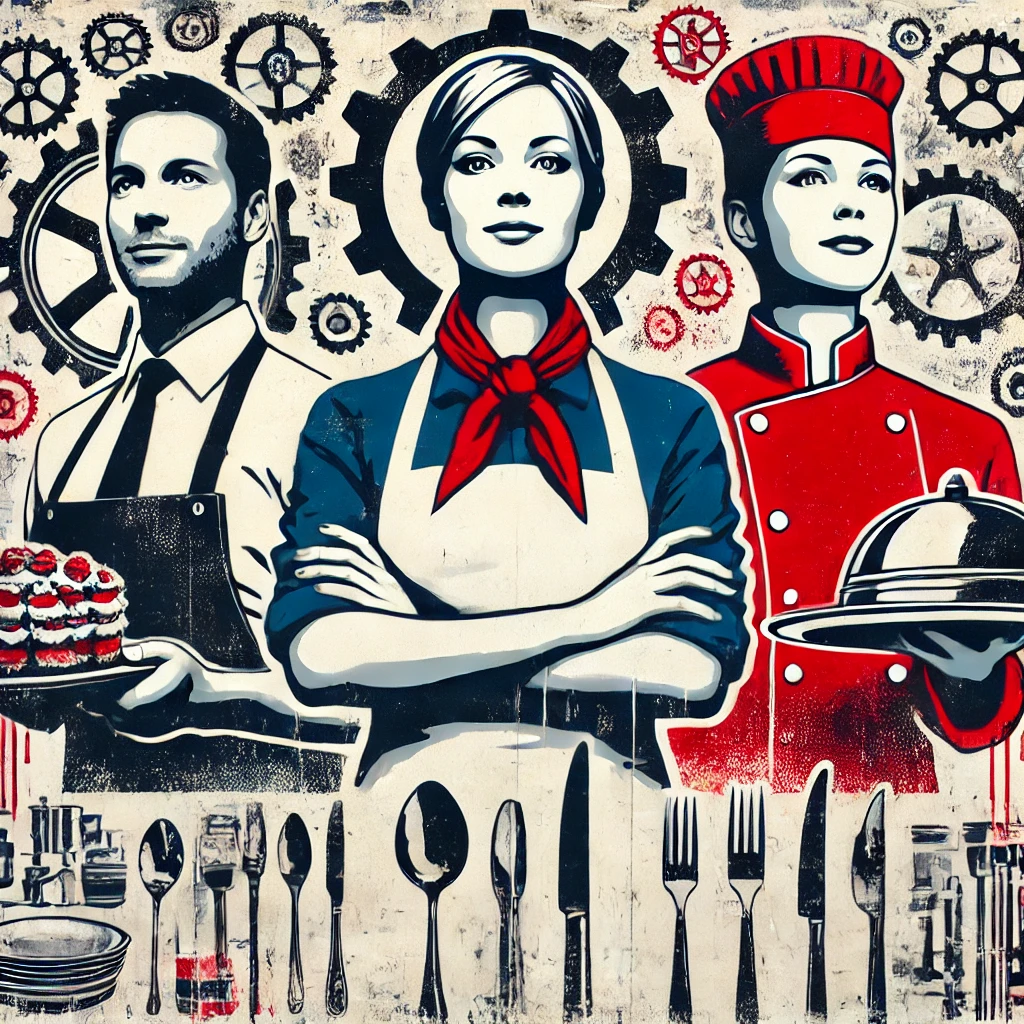
INTRODUCTION - We Didn’t Lose Hospitality Overnight – We Lost It One Compromise at a Time
Published 28.01.2026
Before Brexit and before COVID, hospitality in the UK was, for the most part, steady. Not perfect. Never easy. But workable. And in hospitality terms, workable is about as good as it gets.
The daily headaches were familiar. Rotas that never quite lined up. Deliveries arriving at the worst possible moment. Equipment choosing peak service to give up. Demanding guests. The beautiful chaos that comes with any business built entirely on humans.
Most operators felt broadly positive. Teams stayed. Standards held. And more than that, we laughed. We argued. We swore. We got cremated on busy services and then went for a drink after, usually promising we’d only have one. When things were tough, we pulled together. When someone was struggling, the team covered. No questions asked. Not because it was written in a handbook, but because that was just how it worked.
The work was hard and the hours were long, but there was structure. Camaraderie. A shared understanding of the deal. You gave a lot, sometimes more than was sensible, and in return you got pride, belonging, and the sense that the effort actually counted. It wasn’t perfect. But it was sustainable. And that’s why people stayed.
Then Brexit and the pandemic disrupted that balance. Labour supply reduced. Businesses closed. Operators were pushed into survival mode. Furlough helped with wages, but it didn’t remove risk. Employers still carried National Insurance, pensions, holiday accrual, and fixed costs, all while operating under prolonged uncertainty. Redundancies became unavoidable. For some EU nationals, losing a job meant leaving the UK altogether. Others stayed, but moved on, finding work in sectors that thrived during the pandemic and offered stability hospitality couldn’t. The workforce didn’t just shrink. It was displaced because of decisions made under sustained pressure.
The deeper damage came after the crisis. Temporary compromises made to survive were never fully undone. Training was shortened or quietly skipped. Rota stability gave way to constant last-minute changes that everyone pretended were temporary. Managers were pulled off the floor and buried in admin or forced to cover shifts, leaving little time to actually manage. Standards slipped slowly, then quietly. Feedback became reactive. Culture wasn’t rebuilt. Leadership presence thinned. And the job gradually stopped feeling like a profession and started feeling like something you’d rather hide from under the duvet.
As a result, many people didn’t stop choosing hospitality because they can’t work hard. They stopped choosing it because the deal no longer feels fair.
Feling uncomfortable yet?
Hospitality doesn’t have a labour problem. It has a leadership one. The path forward isn’t heroics, slogans, or asking people to “just push through.” It’s fairness. Accountability. And a conscious reset of standards, culture, and presence.
If we want a different outcome, we have to behave differently. Truth hurts.
That starts with acknowledging that churn has a cost and treating it like any other operational failure, not an unavoidable fact of life. It continues with hiring more honestly, even if that means staying short-handed a little longer and surviving a few awkward services. And it requires making the job fair, not heroic, by restoring leadership presence on the floor, where it always should have been.
Not because it’s nostalgic. Not because it’s nice. But because it works.
SO HERE’S THE CHALLENGE
Name one “temporary” compromise you’re still living with. One shortcut. One habit. One decision that made sense in survival mode but never got reset.
Write it down. Say it out loud and ask yourself a simple question.
If this is still here next year, what does it say about how I lead?
That’s where the reset starts.
Next in the series: Part 1 — The Call to Action: The Reset